Monday, November 9, 2009


HANDLING OUR LIMITATIONS
(November is Epilepsy Awareness Month)


"Jump, survive or die thoughts" flooded my mind at this moment. Too late to look back.


No regrets. Weeeeeeee.........I am gliding and flying like a bird. Greatest feeling in my life.


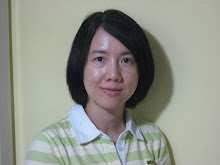
For this epilepsy awareness month, I wish to share my personal views as a person living with epilepsy for close to 40 years. Living with epilepsy comes with limitations to some extent. No driving. No swimming alone. No climbing heights. No late night parties that deprive sleep. No alcohol consumption. No over stressing myself over everything in life. No parachute jumping. No, no, no.....the list goes on.

Nobody will like to lead a life filled with too many "No" but don't all of us have some kinds of "No" in our lives? Some people have to say no to certain types of food because of allergies. Some will say no to outings because of lack of accessibilities for wheelchairs. Many will say no to luxurious shopping and eating because of tight financial budgets. Saying no is part and parcel of life. Same goes with saying yes.

How successful we are in living our lives to the fullest depend on how we juggle and cope with the "No" and "Yes" in our lives. Are you the type that allows "No" to downgrade your life or do you take "No" as challenges to improve yourself and your life?

I view life as very fragile and unpredictable. Anything can happen in life. Tragedy does not pick and choose it's victims. Two young boys ran and hid themselves under a tree but was struck dead by lightning. A young toddler laughed to her death. A 17 year old student was permanently blinded by acid. A couple looking forward to marriage was killed in a tragic car accident. A pregnant mum had her handbag snatched from her while she was riding a bike. She fell and injured herself seriously on the road. She was sent to hospital but died in a coma.

With so many uncertainties looming in our lives, it no longer bothers or troubles me that I am epileptic. I have learned to accept and cope with whatever life has to throw onto me. Is it worthwhile to worry excessively over the situations and conditions you are in or does it make more sense to take full charge and control of your life. Manage your life as best as you can and be content with whatever life has to offer. Your life is whatever you make it out to be.


EPILEPSY IS MANAGEABLE AND CONTROLLABLE. IT IS NOT AS TERRIFYING AS IT SEEMS.


Sunday, November 1, 2009


LIVING WITH FITS

Wheel Power
By ANTHONY THANASAYAN


Celebrating my son's 21st Birthday


EPILEPSY is a condition of the brain which causes a person to become unconscious. This happens for short periods of time where he or she will move about in an uncontrolled, and sometimes violent, way. Such movements are called “seizures”. They are caused when there is a sudden and involuntary surge of electrical activity in the brain. No one knows why this happens and so there is currently no cure for epilepsy. The person experiencing a seizure goes through a motion that alters the way he or she thinks, acts or feels.

Now, anyone reading these few paragraphs may be terrified of the disease, especially if it were to affect them or their loved ones. Not Serene Low, however, who lives in Bangsar, Kuala Lumpur. The 49-year-old wife and mum of a 21-year-old son is convinced that having epilepsy is neither a death nor life sentence.

“Life is still beautiful with epilepsy,” she told Wheel Power last week. Low is in the best position to know this as she has epilepsy herself, a condition she has lived with for nearly 40 years. In that time, Low has experienced more than 100 attacks.

“The good news is, today, there are many types of anti-epileptic drugs available,” she said.

“With proper diagnosis and the right medication, seizures can be fairly well, if not, very well controlled,” added the prominent epileptic awareness activist whose blog www.epilepsylegacy.blogspot.com won a top health blogger award in February this year. Low pointed out that when taken regularly and as prescribed, anti-epileptic drugs can prevent seizures in a majority of people.

It has been estimated that at least 50% of all patients with epilepsy gain complete control of their seizures for substantial periods of time. Another 20% enjoy a significant reduction in the number of epileptic attacks.

“I have lived with epilepsy for most of my life and I’m fortunate to say my seizures are very well controlled. I would also like to point out that without epilepsy, I would not be the epilepsy activist that I am today. My experience with the disease has helped me stay connected and in touch with other leading epilepsy activists, caregivers and people with epilepsy (PwE) not only in the country but around the world as well.”

Low stressed that being an epileptic does not make her feel different from anyone else. In fact, her epilepsy blog has been a huge plus factor for her. "It has opened a whole new dimension in my life,” she explained. “I have loyal followers and readers, many of whom are PwE who leave inspiring and motivating comments for me. In fact, if not for epilepsy, I would still be the shy and quiet person that I used to be.”

Low had her first seizure as a child after a high fever. Then she stopped having them for about 10 years until they recurred when she was 18. Her last seizure occurred in March.

“Epileptic seizures can be extremely dangerous for PwE, especially when they happen in dangerous places,” explained Low. “Once it happened when I was swimming in Port Dickson where I almost drowned. Another time, I was at a traffic light waiting to cross a busy street and the seizure caused me to fall down on the five-foot way where I broke the whole upper front row of my teeth and needed extensive dental surgery.”

Despite those difficult times, Low said that life has to go on for everybody and especially for PwE. “In my case, I have learned to look beyond epilepsy. The way I see it, the horizon beyond epilepsy is colourful, beautiful and captivating like the artworks of Vincent Van Gogh and his divine paintings. His paintings have inspired me in my art which is one of my greatest interests.”

Low said that although her art may never find a place in art galleries, painting has become a therapeutic pastime for her. Three weeks ago, she submitted 13 paintings to Jim Chambliss, who calls himself “a reformed attorney” after successfully rebounding from traumatic brain injury in 1998. He is currently doing research on the influence of human conditions such as epilepsy and migraine in art at the University of Melbourne and St Vincent’s Hospital in Australia.

Low was delighted that her works were picked as part of a study by Chambliss, entitled Epilepsy and Creativity. Chambliss, incidentally, is also a PwE.


Source: thestar.com.my


.

Thursday, October 29, 2009


SEVERE MYOCLONIC EPILEPSY IN INFANCY (SMEI) OR DRAVET SYNDROME


This is a very rare form of childhood epilepsy. Out of 500 children with epilepsy, only one, or at most two, children are likely to have this form of epilepsy. It is also called Dravet Syndrome. The epilepsy starts with seizures which may not initially differ from those associated with feverish illnesses (febrile convulsions).

Generally, this syndrome tends to develop during the second year of life. It may not be possible to make this diagnosis until the child is two, three or even four years old. The seizures begin in the first year of life. They are most often associated with high temperatures and often just involve one side of the body, although both sides of the body may be involved.

The seizures are characterised by jerking rather than stiffness and jerking. They often recur quite frequently in the first year of life. However, at this time it is not easy to differentiate these children from others with febrile convulsions who get better and who do not go on to develop other types of seizure.

During the second year of life of children with SMEI, seizures become more frequent and persistent, are often more obviously partial (involving one part of the body) and no longer occur when a child has a high temperature but at any time of day and night.

In addition to the partial seizures, myoclonic jerks (‘myo’ meaning muscle, and ‘clonus’ meaning jerk) become prominent. Often the children are photosensitive (have seizures brought on by flashing lights). Seizures may also sometimes be brought on by hot environments or hot showers or baths.

The early development of affected children is usually normal but once the myoclonic seizures and partial seizures start in their second year of life, children may lose skills or their developmental progress may slow down. The child’s speech and language maybe particularly affected.


For more information on Dravet Syndrome please visit www.epilepsy.org.uk


.

Sunday, October 25, 2009


EPILEPSY MUNCHIES

A Particular Blend Of Love For People With Epilepsy (PWE)


4 cups flour
1/2 cup full of Love
25gm Kindness and Forgiveness
25gm Bliss seeds
2 tbsp Gentle powder
100gm Togetherness
Lovey-dovey oil
Joy butter, sugar and salt

Sift flour. Add water. Mix it together. Add tenderness and set aside for a lifetime. Mix Love with Kindness and Forgiveness. For stronger ties and connections, add Bliss seeds, Gentle powder and a dollop of Togetherness. Add kisses to mixture and knead into firm dough. Allow dough to sit for years and years.

Sprinkle crushed Joy butter, sugar and salt for added Togetherness. Grease baking pan. Mold dough into shapes of your heart. Bake epilepsy munchies in oven till crunchy and aromatic.

Serve epilepsy munchies throughout generations. Whoever eats it will forever remember what epilepsy is all about.


.

Monday, October 12, 2009


BLOOD DONATED BY EPILEPTICS NOT ACCEPTABLE


About three over years ago, my late dad was in a critical condition in a private hospital. Doctors informed us that our dad had vomited excessive blood due to a nasty ulcer in his stomach. We were told to return seven (1.5litre) packets of blood to replenish the hospital's blood bank. The doctors had intended to transfuse seven packets of blood into my dad's body to sustain his life.

My siblings and I had blood tests done immediately to determine if all of us can donate blood. Most unfortunately, I was unable to donate blood. The lab medical officer told me that epileptics' blood are not acceptable by hospitals because of fears that epileptics' blood might contain traces and elements of anti convulsant drugs' effects like phenobarbital, epilim, tegretol, keppra, etc. There are worries that recipients of blood donated by epileptics might react to the side effects of anti convulsant drugs.

In this article I do not intend to elaborate in great length on medical issues surrounding blood donated by epileptics. I only wanted to highlight the emotions or rantings of an epileptic, that is, myself.

I was devastated to find out I was not allowed to donate blood for my dad's survival chances. In such a life and death situation involving my loved one, it was most nerve wreaking, upsetting and frustrating for me to be deprived from donating blood. If only I had not revealed on the blood test form that I am epileptic. Maybe in future, I will not attempt to reveal my epileptic condition when I wish to join in my church's annual blood donation day. Or maybe I will not.....Ohhhhhh!!! Epilepsy makes my blood worthless cos it is tainted and contaminated beyond any good use for other people.

To those who are able to donate blood, be grateful and donate whenever possible to save lives. I will never ever have the chance to donate blood as much as I would like to. I feel so lousy.


.

Monday, October 5, 2009

Heather Siebens - Epilepsy Activist (Chandler, USA)


I have met SOOOO many amazing people on twitter...naming just a few on here to start...we all need to connect more--talk more out. And get others who aren't--connected!! Amazing blog humbled me big today--Jesus works wonders in all circumstances.


Hi All,

Meet my famous and untiring epilepsy activist friend, Heather Siebens (Hetty) from USA. I got to know Hetty from Twitter. Meeting and communicating with Hetty was one of the happiest things that unfolded to me recently.

Hetty is a lively, bubbly, positive minded person with epilepsy. If you care to view more of Hetty's YouTube videos you will find out from her the various illnesses she is going through in her life. She does not complain about her illnesses but instead advices people to face and accept their illnesses courageously. Adversities are part of everyone's lives.

Hetty not only copes with her own epilepsy condition but she also serves as a great and loving caregiver to her daughter who also has epilepsy. There are chain reactions in life. I am most uplifted by Hetty's constant active participation and contribution towards promoting epilepsy awareness. Likewise, I hope I have been a good source of inspiration to others. And for the people who have been inspired by Hetty and me, I hope you all will on your part be equally uplifting to some more other people.

In a highly stigmatized society that we live in, let us work as an unbreakable united force to eradicate or reduce wrong myths and misconceptions about epilepsy.


HAND IN HAND WE WILL MAKE THIS WORLD AN EPILEPSY FRIENDLIER WORLD


(Hetty can be connected in Twitter @EpilepsyCures or @AliveinMe or you can visit her at www.epilepsycures.ning.com)

Acknowledgement : Thank you very much Hetty for mentioning me in this YouTube video of yours.


.

Sunday, September 20, 2009


"Applaudable Efforts in Educating Young Children about their medical condition"


The superheroes fighting disease

By Jane Elliott
Health reporter, BBC News

Skinderella
Skinderella - can morph into a skeleton and knows all about skin and bone

When a 12-year-old patient asked for help understanding his newly diagnosed leukaemia, Dr Kate Hersov knew she had a problem.

"He said 'I can hardly pronounce it, let alone understand it," she said.

Growing increasingly frustrated by what she perceived as a worrying lack of child-focused information, she and fellow medic Dr Kim Chilman-Blair teamed up to produce a series of superhero comics, designed to educate.

"Often when we made a diagnosis of a young child we felt helpless that we had nothing to give the child themselves to understand what we had just told them," she said.


Comic book heroes

"Kim had one particular patient, an eight-year-old girl called Wendy, who had epilepsy and had just been diagnosed. After she was diagnosed she just looked at Kim forlornly and said: 'Is there nothing I can read'?

"There was nothing out there we could give her - nothing for the young patients themselves. So it was out of our frustration as clinicians that we created Medikidz. We knew children needed a place to go to understand the medicine, whether that be the diagnosis, medicines or treatment procedures."

The 'Medikidz' are a gang of five larger-than-life superheroes, designed to educate children through a wide range of media.

One element is an interactive website featuring a virtual world of the human body which the child can explore and the opportunity to create their own avatar (virtual identity) to talk to other children about their condition.

Dr Chilman-Blair said: "Parents sometimes feel that children are too young to understand medical concepts, or that they are better off not knowing.

"The Medikidz programme wants to change this view. We don't sugar-coat serious problems, we provide clear and factual information in a way that is easy to understand and engaging to read. We want the children who use Medikidz to be in control of their illness."


Covering disease

Both doctors want eventually to cover 300 paediatric conditions, but have launched this week with the first ten - including Type 1 diabetes, epilepsy, leukaemia and asthma. In the asthma comic book the newly diagnosed Max Bond is taken on a tour of his lungs, while the superheroes Chi, Skinderella, Gastronomic, Pump and Axon explain how and why his lungs malfunction and the drugs that can be used to help.


Kim Gillberg, health promotion manager at Asthma UK, said the project had the potential to provide a valuable tool to help children. "It's important that children and young people are given options in the way they access health information and we fully support the use of engaging and interactive materials," she said. The essential thing is that the information provided is accurate, positive and empowers children and young people to be able to manage long-term medical conditions, such as asthma, effectively. All the comic books are peer reviewed and have input from play specialists, nurses and often charities.
Pump - a superhero
Pump - has superhuman strength and speed

Dr Chilman-Blair said the first editions would be aimed at the 10-15 age group, but that they also plan a story board format for younger children.

"We chose the graphic novel or comic because it is appealing to children of a wide age group from childhood up to adulthood," she said.

Books cost £5.99 each and are available through the website, but the doctors hope that they will eventually be widely distributed.

"I would like to see a Medikidzs comic book given to every kid when they are diagnosed", said Dr Hersov.

Grenville Fox, clinical director at the Evelina Children's Hospital, where the comics were launched said they could be invaluable. "For a lot of children, spending time in hospital and dealing with their illness can be a daunting experience." he said. This can be made easier for them by providing them with information in a way they can understand and relate to.

"The Medikidz characters and leaflets are a great way for our patients to learn about their bodies and illnesses in a fun and accessible way."


source : news.bbc.co.uk